
Last updated: 21 September 2026 | Editorial Note: Verified against mfa.gov.tr regulations to ensure maximum accuracy for UK travellers.
Planning a trip to Turkey in 2026? The eVisa Turkey is a mandatory digital travel authorisation for eligible non-exempt visitors. This guide explains exactly who needs one, how the online application system works, and how to avoid overpaying third-party agencies.
Launched on 17 April 2013, the electronic visa system allows travellers to obtain their entry permit online via evisa.gov.tr before arrival.
While UK citizens are currently exempt from visa requirements for short stays, eligible passport holders must navigate specific passport validity rules, such as the 60-day rule. Understanding these requirements ensures a smooth border crossing and helps you avoid inflated agency markups that can reach 79.95 GBP.
What Is a Turkey eVisa and How Was It Established?
The Turkey eVisa, launched on 17 April 2013, is a digital travel authorisation holding the exact same legal standing as a traditional consulate-issued sticker visa under Law No. 6458.
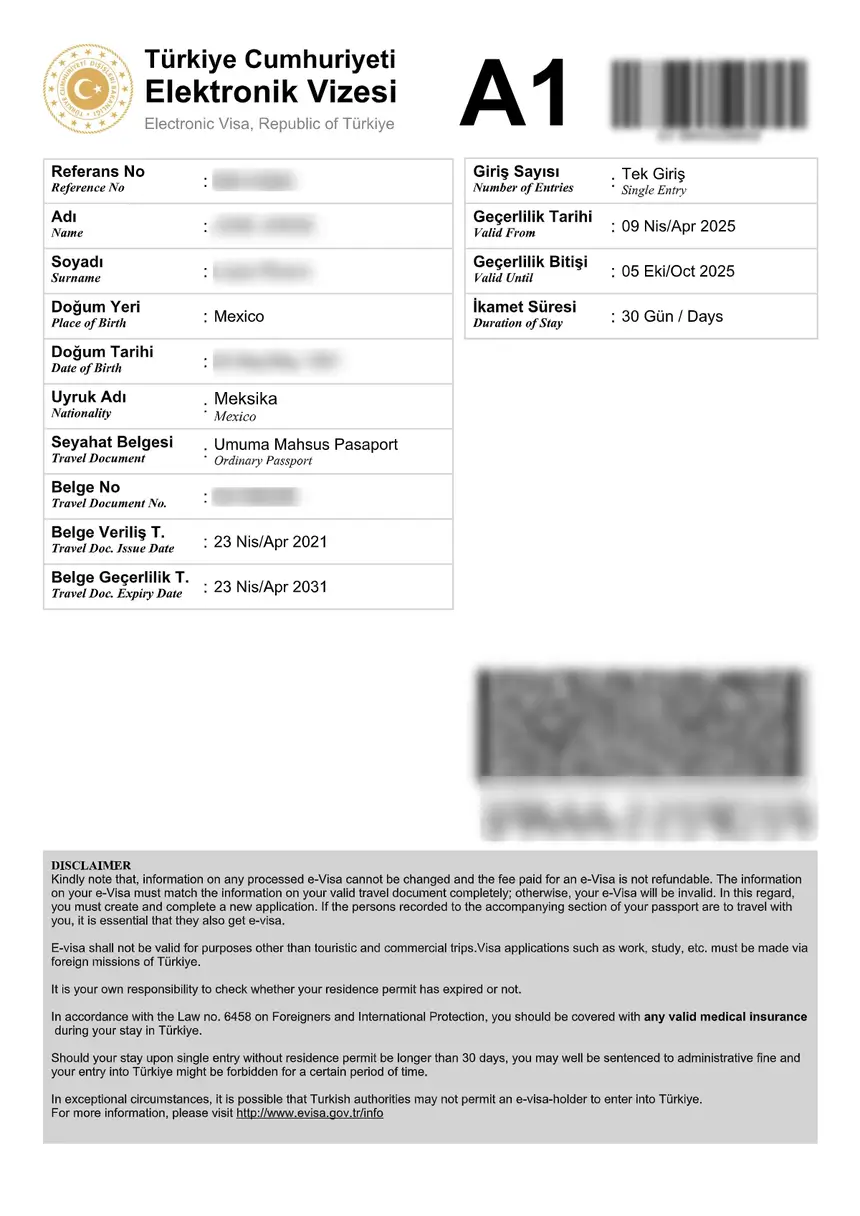
The Turkey eVisa replaces the older visa on arrival process, allowing eligible travellers to secure their entry permit entirely online before departure. This digital document authorises entry specifically for tourism and short-term commerce purposes.
To ensure secure processing, the Turkish government established a strict governance chain for the system. The Ministry of Foreign Affairs oversees the Foundation for Strengthening the Foreign Affairs Organization, which manages DTV Consultancy – the operator of www.evisa.gov.tr.
Do You Need a Turkey eVisa in 2026?
Turkey eVisa eligibility depends on your passport nationality: UK citizens are visa-exempt for stays of up to 90 days, while eligible non-exempt travellers must apply online at evisa.gov.tr.
- Visa-exempt nationalities: British passport holders do not require a visa for short trips and can use the e-Passport gates upon arrival.
- Eligible non-exempt travellers: Must obtain an approved Turkey eVisa before travel. Every individual, including infants, requires their own separate application.
- Dual nationals: You must apply using the exact passport you will present at border control.
- Transit passengers: Travellers remaining strictly within the international airside transit zones of IST (Istanbul Airport) or SAW (Sabiha Gökçen Airport) are exempt from visa requirements.
What the Turkey eVisa Covers – and What It Doesn’t
The Turkey eVisa authorises eligible travellers to enter the country strictly for tourism and short-term commerce. The system explicitly denies entry for long-term commitments, including employment, academic study, and truck driving.
| Permitted Activities | Excluded Activities |
|---|---|
| Tourism and holidays | Paid employment |
| Commerce (short-term business) | Academic study |
| Unpaid conferences | Truck driving |
| Short-term meetings | Archaeological research |
The Ministry of Foreign Affairs mandates that foreign documentary filmmakers and researchers must obtain special permission from Turkish authorities in advance. A Turkey eVisa cannot be used for these specialised professional projects, requiring applicants to secure an appropriate consular visa before arrival.
Turkey eVisa Requirements and Documents
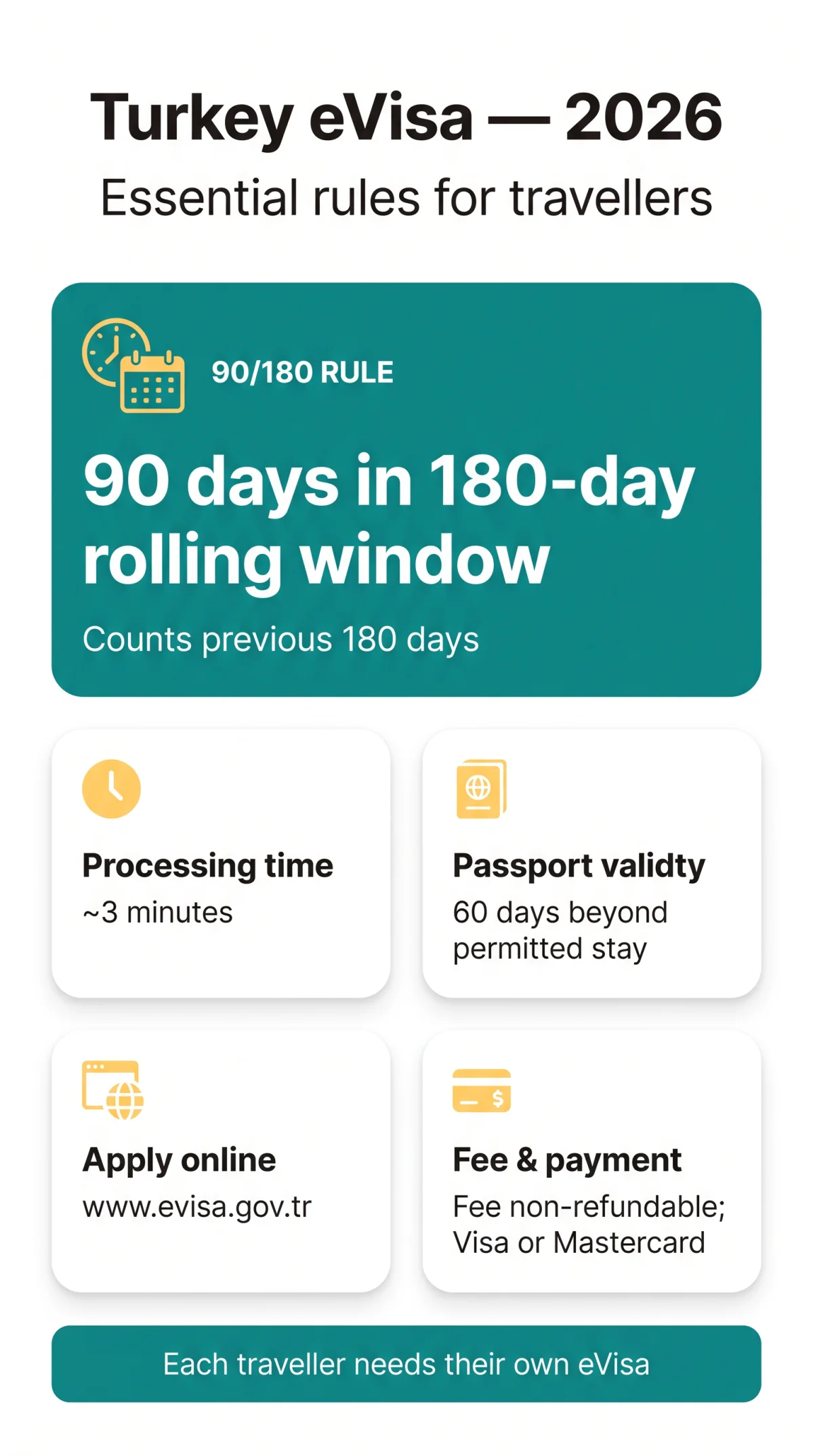
The Turkey eVisa requires applicants to hold a passport valid for at least 60 days beyond their permitted stay, as mandated by Article 7.1b of Law No. 6458. This statutory formula strictly dictates entry conditions and eligibility requirements in 2026.
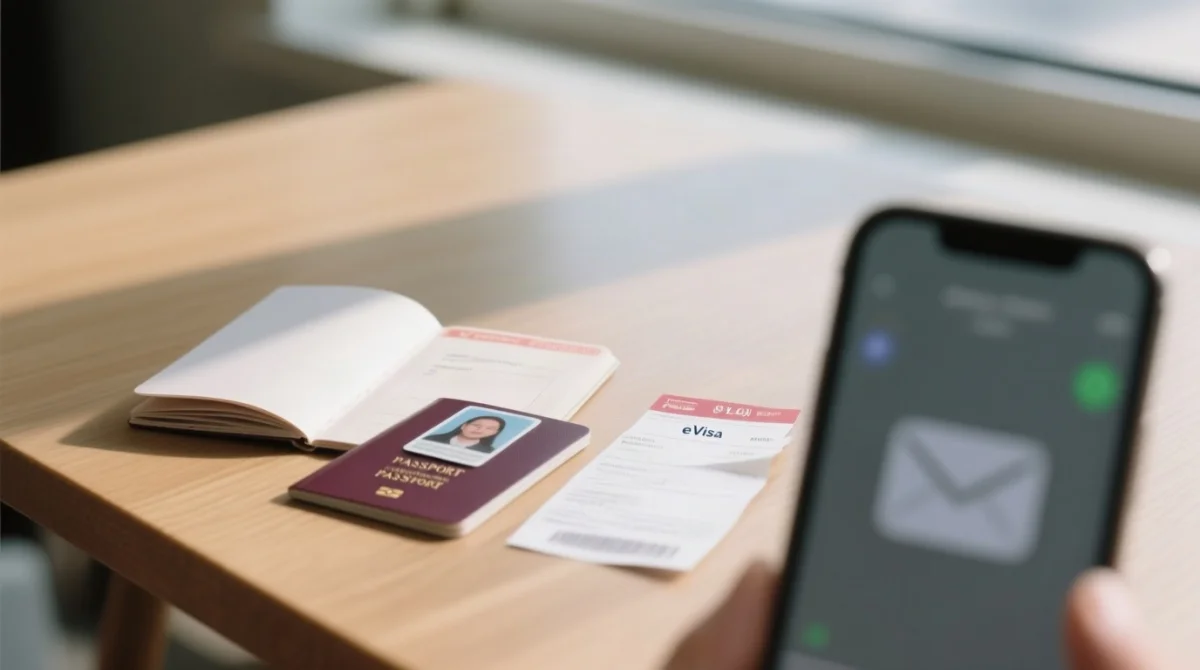
The system requires a valid email address and, for some nationalities, a digital photo.
| Permitted Stay Duration | Minimum Passport Validity Required at Entry |
|---|---|
| 90 days | 150 days (90 days + 60 days) |
| 30 days | 90 days (30 days + 60 days) |
How to Apply for a Turkey eVisa Step by Step
The Turkey eVisa application follows four simple steps: profile creation, document upload, payment, and download. The platform operates 24/7 at www.evisa.gov.tr. You can submit your application at your earliest application window prior to departure. For a detailed walkthrough, see our complete step-by-step application guide.
Create Profile
Enter basic passport and travel details into the secure system.
Upload Files
Submit any required supporting documents based on nationality requirements.
Make Payment
Clear the required fee using a standard Visa or Mastercard debit card.
Download the E-Visa
Receive the approved travel authorisation via email.
The Turkey eVisa infrastructure also accommodates tour operators, allowing them to submit group e-Visas and process lump sum payments simultaneously.
How Much Does a Turkey eVisa Cost in 2026?
The Turkey eVisa exacts a base application cost that varies by nationality on the government portal, making it significantly cheaper than the £79.95 typically charged by third-party agencies. For a full breakdown of current fees, see our complete eVisa Turkey cost and fee guide.
The Turkey eVisa requires payment during the application process using standard Visa or Mastercard debit cards. The fee is non-refundable regardless of rejection, error, or change of plans. To avoid unnecessary agency markups, applicants must process their payment directly through the government platform at www.evisa.gov.tr. The exact statutory fees for 2026 are listed on the Ministry of Foreign Affairs fee schedule.
| Fee Category | Cost / Details |
|---|---|
| Government Fee | Varies by nationality (statutory fee only) |
| Agency Markup Example | £79.95 (e.g., The Travel Visa Company) |
| Accepted Payment Methods | Visa or Mastercard debit cards |
Turkey eVisa Validity, Entries and the 90/180-Day Rule
The Turkey eVisa is issued as 30-day single-entry or 90-day multiple-entry, with a 90-day max stay in a rolling 180-day window. For more detail on permitted durations and extensions, read our guide to eVisa Turkey validity periods and overstay penalties.
The eVisa Turkey system enforces a strict rolling timeframe that counts backwards from your current date in the country. This means the Turkey eVisa requires travellers to track their entry and exit dates carefully to avoid overstaying.
Here is an example:
- If you enter Turkey on 1 September 2026, the system checks your previous stays back to 5 March 2026.
- If you previously stayed for 30 days in June, you only have 60 days remaining for your current trip.
- Once you reach the 90-day cap, you must leave the country and wait for older trips to fall outside the 180-day window before returning.
Where Can You Use Your Turkey eVisa and How to Present It
The Turkey eVisa authorises entry at all Turkish airports, land crossings, and seaports in 2026. Border officials require travellers to present this document alongside a valid passport. Carry a printed and digital copy.
- Port of entry access: The Turkey eVisa grants access through any designated border control point, including maritime cruise ship terminals.
- Airside transit exemption: The Turkey eVisa system exempts passengers transiting strictly through the international zones of IST (Istanbul Airport) and SAW (Sabiha Gökçen) airports from holding a valid visa.
- Document presentation: At immigration, travellers must show the downloaded PDF on a mobile device or as a hard copy.
The evisa.gov.tr platform allows users to retrieve a lost Turkey eVisa directly. Applicants must log into the portal using their original passport data and application details to download the PDF document again.
Turkey eVisa vs Visa on Arrival vs Sticker Visa
The eVisa is the fastest option; consular visas are needed for work, study, or stays over 90 days. Additionally, any stay exceeding the 90-day post-arrival police registration threshold requires a proper residence permit or sticker visa.
A Turkey eVisa processes in approximately 3 minutes and is cheaper than a Visa on Arrival. Travellers must apply for a traditional sticker visa in advance for excluded activities, including documentary filmmaking or archaeological research.
| Pathway | Permitted Activities | Maximum Stay | Processing Speed |
|---|---|---|---|
| Turkey eVisa | Tourism and commerce | Up to 90 days | ~3 minutes |
| Visa on Arrival | Tourism | Short stays | Subject to border queues |
| Sticker Visa | Employment, study, research | Over 90 days | Requires advance application |
Turkey eVisa Common Mistakes and How to Avoid Them
The most common Turkey eVisa errors include passport name misspellings, miscalculating the 60-day validity rule, and applying through third-party websites. For help resolving these issues, see our complete guide to eVisa Turkey application errors and fixes.
- The Turkey eVisa system rejects typo corrections post-issuance, requiring applicants to submit a new application and pay a new non-refundable fee.
- The Turkey eVisa demands a passport valid for exactly 60 days beyond the permitted stay, as mandated by Law No. 6458.
- Applications must be processed via www.evisa.gov.tr to avoid unauthorised third-party markups or fraudulent services.
- Every infant and minor requires their own individual eVisa, regardless of whether they are travelling on a parent’s passport.
Turkey eVisa FAQ
How long does it take to process a Turkey eVisa?
The electronic visa application system is available 24/7, and the standard processing time is approximately 3 minutes.
Do UK citizens need a Turkey eVisa in 2026?
No, British passport holders do not currently require a visa to enter Turkey for short stays of up to 90 days. UK citizens are visa-exempt for tourism purposes in 2026 and can use the e-Passport gates without applying for a Turkey eVisa beforehand.
Can I correct a spelling mistake on my Turkey eVisa?
No, you cannot correct a spelling mistake once the application is submitted. The system does not allow any modifications to passport name misspellings or other errors. If you make a typo, you must submit a completely new application and pay the government fee again.
Do infants and children need their own Turkey eVisa?
Yes, every infant and minor must have their own individual Turkey eVisa. The application requirements state that children cannot be included on a parent’s electronic visa. You must complete a separate application and pay the applicable fee for each travelling child.
Is the Turkey eVisa application fee refundable?
No, the Turkey eVisa application fee is strictly non-refundable. The fee is non-refundable regardless of rejection, error, or change of plans.
Which passport should dual nationals use for the Turkey eVisa?
Dual nationals must apply for the Turkey eVisa using the exact same passport they intend to present at border control upon arrival. Your digital travel authorisation is electronically linked to that specific travel document, so they must match perfectly for a successful entry.
How can I retrieve a lost Turkey eVisa?
If you lose your digital or printed copy, you can retrieve your lost Turkey eVisa by logging back into the evisa.gov.tr portal. You will need to provide the reference number or the passport details used during the original application to download the PDF document again.
What payment cards are accepted for the Turkey eVisa?
The online application system accepts standard debit cards and credit cards operating on the Visa or Mastercard networks. You must pay the required government fee using one of these accepted payment methods during the third step of the application process.
Can I enter Turkey by land or sea with a Turkey eVisa?
Yes, the Turkey eVisa is accepted at all Turkish airports, land border crossings, and maritime seaports or cruise ports. Carry a printed and digital copy of your entry permit to present at any of these border control points.
What is the 90/180-day rule for the Turkey eVisa?
The 90/180-day rule means you are permitted a maximum stay of 90 days within any rolling 180-day window. This period is calculated as a rolling backward window, counting backwards from your current date of stay to ensure you have not exceeded the 90-day limit.