

Author’s Note: This guide was prepared by a travel regulations analyst with 8 years of experience in Turkish immigration procedures. All information has been cross-checked against official government sources as of March 2026. Published: 15 March 2026 | Last reviewed: 20 September 2026.
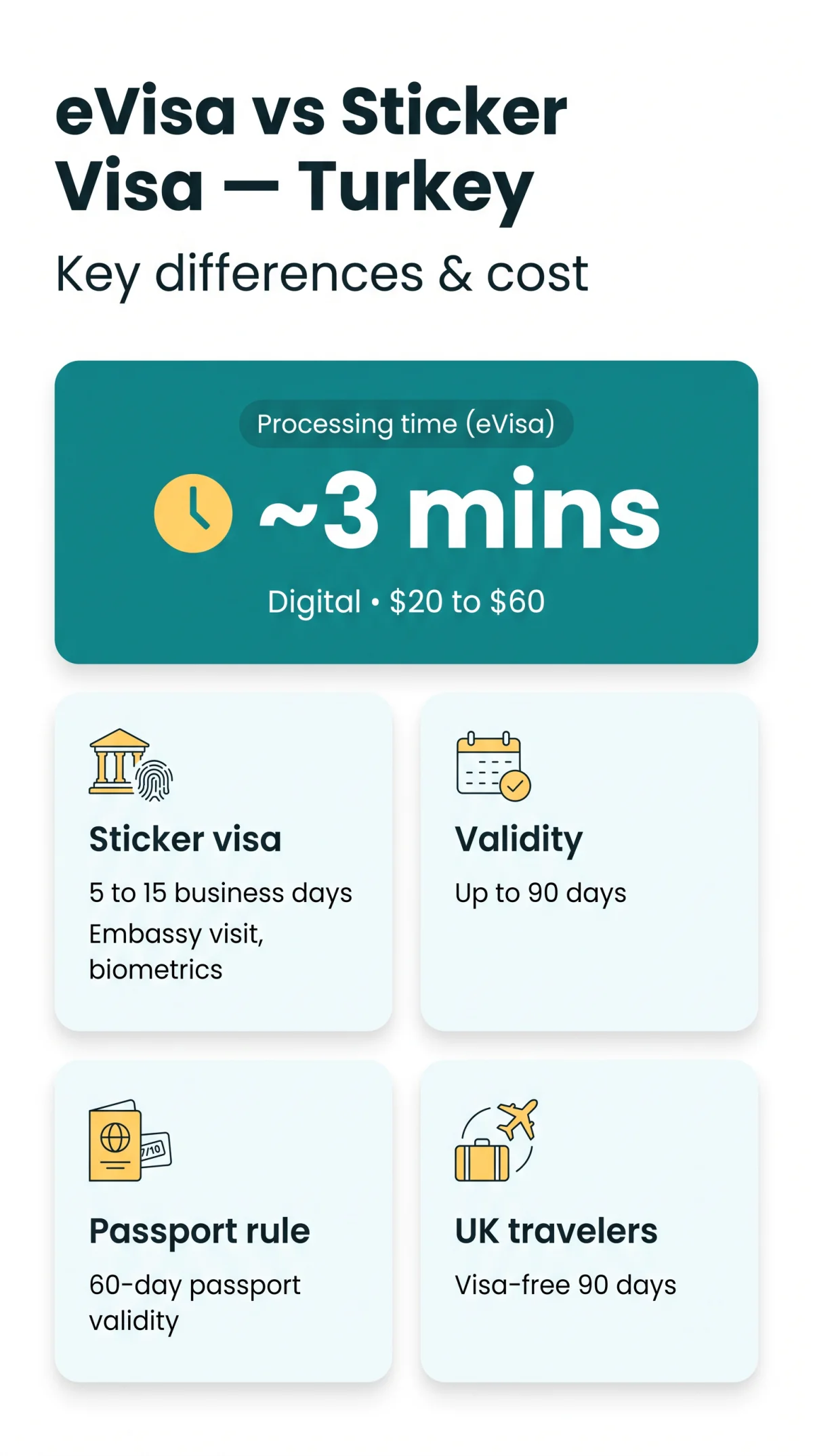
A Turkey eVisa is a fully digital travel permit costing $20 to $60 and approved in approximately 3 minutes. In contrast, a sticker visa requires an embassy visit, biometrics, and 5 to 15 business days. UK citizens can enter Turkey visa-free for up to 90 days.
eVisa Turkey vs sticker visa differs in processing time, physical requirements, and eligibility. The electronic visa system operates 24/7 online without consuming passport pages, while traditional applications demand Visa Application Centre appointments.
Disclaimer: This site is an independent travel information resource and is not affiliated with any government agency. Always verify current requirements on official channels before travelling.
eVisa vs Sticker Visa: Key Differences at a Glance
Turkey eVisa is fully digital, costs $20 to $60 USD, and takes 3 minutes; a sticker visa is a physical passport foil requiring an embassy visit and 5 to 15 days processing.
Launched on 17 April 2013, eVisa Turkey requires no biometrics and uses zero passport pages; a sticker visa needs an embassy visit, fingerprints, and one blank page.
| Type | Format | Channel | Cost | Time | Validity | Purpose | Biometrics | Pages | Refund Policy |
|---|---|---|---|---|---|---|---|---|---|
| eVisa Turkey | Digital (Email/PDF) | evisa.gov.tr | $20 to $60 | ~3 mins | Up to 90 days | Tourism | None | 0 | No refunds |
| Sticker Visa | Foil | visa.gov.tr | Higher | 5 to 15 days | Varies | Tourism | Yes | 1 blank | No refunds |
| Embassy Visa | Foil | Embassy | Higher | 5 to 15 days | Varies | Various | Yes | 1 blank | No refunds |
| Transit Visa | Foil | VAC / Border | Varies | Varies | Under 24h | Transit | Yes | 1 blank | No refunds |
| Work Permit | Digital | csgb.gov.tr | Varies | Up to 30 days | Varies | Employment | Yes | 1 blank | No refunds |
| Residence Permit | Card | Police Dept | Varies | Within 1 month | Long-term | Living | Yes | 0 | No refunds |
How to Apply: Online Process vs Embassy Visit
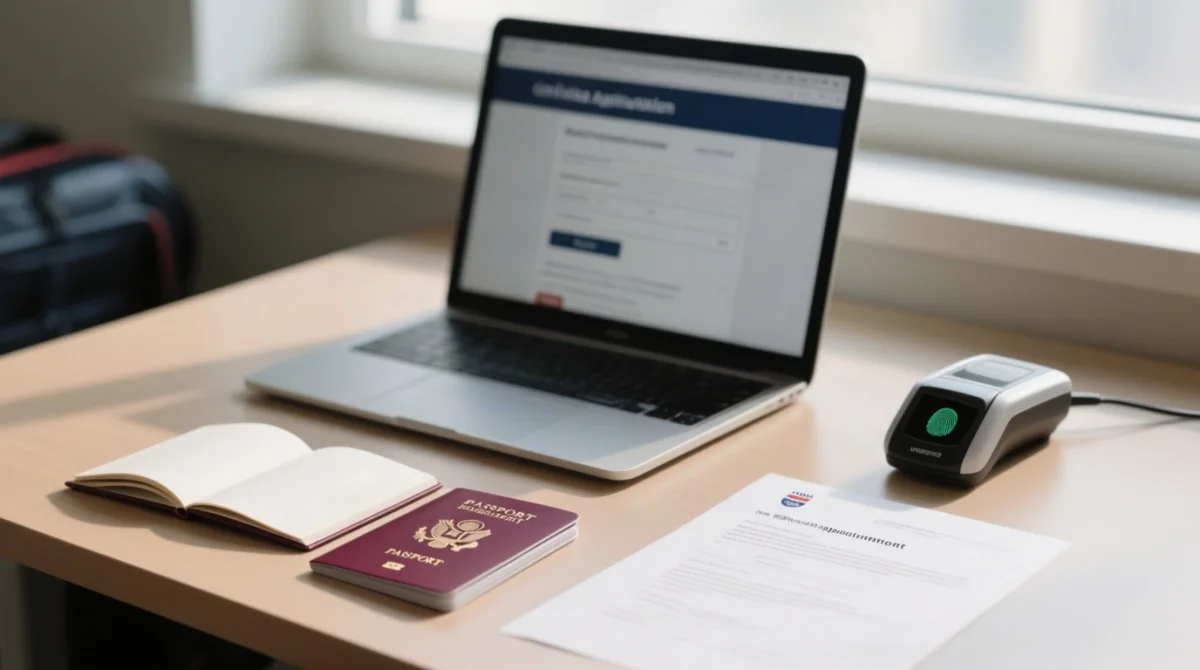
Turkey eVisa is applied for entirely online via www.evisa.gov.tr; a sticker visa requires a pre-application on www.visa.gov.tr plus an in-person embassy appointment with biometrics.
Step-by-Step: Getting Your Turkish eVisa Online
Visit the government portal
Available 24/7
Enter nationality and travel dates
Provide your details
Pay the fee
Using a Credit or Debit card
Receive the approved document
Via Email or PDF download
How to Apply for a Sticker Visa at an Embassy or Consulate
Complete the pre-application
Mandatory system active since 5 January 2016
Book an appointment
At a Visa Application Centre
Attend the in-person visit
For fingerprints and facial scan
Wait for passport return
5 to 15 business days
Cost, Processing Time, and Fees (2026)
Turkey eVisa costs $20 to $60 USD via the government portal and takes ~3 minutes; sticker visa fees are higher, take 5 to 15 days, and incur mandatory service charges.
When evaluating an eVisa Turkey vs sticker visa, the financial and temporal differences are significant. The electronic system processes applications automatically, delivering results almost instantly. Payment is strictly via online credit or debit card transactions. Conversely, traditional sticker visas require higher consular fees plus Visa Application Centre service charges, with manual processing extending timelines, especially during peak 2026 summer months.
Eligibility and Nationality Rules
Citizens of over 100 countries qualify for Turkey eVisa; UK passport holders are visa-exempt for 90 days within 180 days and need neither document.
As of 2026, British citizens benefit from a strict visa exemption, allowing a maximum stay of up to 90 days within any 180-day period. For these tourists, eVisa Turkey bypasses the need for an entry permit entirely.
Additionally, the system processes applications under conditional eligibility for certain nationalities. This framework requires applicants to hold a valid Schengen, USA, UK, or Ireland visa or residence permit to qualify online. Without these prerequisites, travellers must apply for a physical sticker visa.
Entry Rules, Stay Limits, and What to Do If Your eVisa Is Denied
Turkey eVisa allows 30 to 90 day stays with 60-day passport validity; if denied, re-apply with corrected data or fall back to a sticker visa at a Turkish embassy.
According to the Turkish Ministry of Foreign Affairs (2026), applicants must meet strict passport validity requirements. Source: Law No. 6458, Article 7.1b dictates a passport must remain valid for at least 60 days beyond the duration of stay. Despite this legal minimum, airlines and authorities strongly advise holding a passport valid for at least 6 months from the arrival date.
If the digital system denies an application, eVisa Turkey provides no formal appeal process. Post-submission edits are not allowed. Case study: A UK traveller reported receiving a denial due to a typo in their passport number. They had to immediately fall back to the sticker visa procedure, booking an in-person consular appointment that took 10 business days. Always double-check your details.
Beyond the Tourist Visa: Transit, Work, and Residence Permits
Turkey eVisa and sticker visa are tourism-only; work permits require separate MLSS employer sponsorship, and residence permits (ikamet) are mandatory for stays beyond 90 days.
According to the Ministry of Foreign Affairs, travellers connecting through Turkish airports do not need a transit visa for an airside layover under 24 hours. Furthermore, cruise ship passengers enjoy a shore excursion exemption, allowing them to explore port cities for up to 72 hours without securing any visa.
Neither an eVisa Turkey nor a traditional sticker visa permits employment. To work legally, foreigners must secure a separate work permit from the Ministry of Labour and Social Security (www.csgb.gov.tr). The MLSS processes these employer-sponsored applications within 30 days at the latest. In-country switching from a multiple entry tourist visa to a work permit is heavily restricted.
While a tourist visa covers short holidays, expats planning to stay long-term must convert their status. Foreigners must register for a residence permit at a local police department within 1 month of arrival.
How to Choose the Right Turkish Visa: Decision Guide and FAQs
This guide and FAQ cover the most common questions on Turkey eVisa vs sticker visa: processing time, work restrictions, transit rules, and passport validity for 2026.
Sources and Methodology: This comparison is based on data from the official Turkish eVisa portal (evisa.gov.tr), the Ministry of Labour and Social Security (csgb.gov.tr), and the Turkish Embassy in London. Processing times are averages as of 2026 and may vary.
Which is better: eVisa or sticker visa for Turkey?
The eVisa is faster and more convenient, costing $20 to $60 and taking about 3 minutes online. A sticker visa takes 5 to 15 business days and requires an embassy visit. Choose the sticker visa only if you are ineligible for the digital route.
What are the different types of Turkish visas available in 2026?
Primary travel documents include the eVisa for tourism, the traditional sticker visa, transit visas for specific layovers, work permits issued by the MLSS, and residence permits for long-term stays.
Do I need a transit visa for a layover in Turkey?
If you have an airside layover of under 24 hours and do not leave the international transit zone, you are exempt from needing a transit visa. Leaving the airport requires an appropriate entry permit.
Can I transfer my Turkey eVisa to a new passport?
No, you cannot transfer an active eVisa to a newly issued passport. The electronic visa is directly linked to the specific passport used during the application. You must submit a new application and pay the fee again.
How do I correct a mistake on my Turkey eVisa application?
Post-submission edits are not allowed. If you make a mistake, there is no formal appeal process. You must submit a completely new application with the correct details or apply for a sticker visa.
Does a Turkey eVisa require biometric data or fingerprinting?
No, the online eVisa process does not require any biometric data. Applying for a sticker visa requires an in-person visit for fingerprints and a facial scan.
Can I switch from a Turkey eVisa to a work permit while in the country?
To work legally, you need a separate work permit sponsored by an employer and approved by the MLSS. In-country switching limitations apply, typically requiring you to apply from your home country.
Do cruise ship passengers need a Turkish visa for day trips?
Cruise ship passengers arriving at seaports for shore excursions are granted a transit exemption. You do not need a visa for port-of-call day trips, provided your stay does not exceed 72 hours and you sleep on the ship.